
Scholars, theologians, and medical ethicists examine contemporary challenges through the Franciscan intellectual tradition.
Leading scholars, theologians, and medical ethicists gathered at Franciscan University of Steubenville November 5–7 to explore some of today’s most pressing questions about suffering, end-of-life care, and human dignity through the lens of Franciscan spirituality and scholarship.
The Sister Death–Gate of Life Conference, held during the worldwide Jubilee Year commemorating the 800th anniversary of St. Francis of Assisi’s death, brought together experts from multiple disciplines to examine the intersection of faith, philosophy, medicine, and ethics.
Franciscan University President Father Dave Pivonka, TOR, emphasized that the Christian understanding of death must be grounded in faith in the resurrection and the hope of eternal life. He stressed the importance of approaching difficult questions about death through both faith and reason.
Recalling the final days of his own father’s life, Father Pivonka described how his father looked forward not to death but to having Jesus present him to God the Father.
“Death is not the worst thing,” Father Pivonka said, explaining that belief in the resurrection transforms how Christians understand mortality. “I love this theme because it engages the intellect and it engages the heart.”
In the opening keynote, Sister Margaret Carney, OSF, president emerita of St. Bonaventure University, explored the extraordinary life of St. Marianne Cope, who devoted herself to caring for people in Hawaii suffering from Hansen’s disease, historically known as leprosy.
Sister Carney described how St. Marianne and her fellow Franciscan sisters challenged the mistreatment of patients, protected vulnerable women and children, and restored beauty and dignity to lives.
“None of us can look at her and say, I can’t do that,” Sister Carney said, presenting the saint’s life as a model of holiness accessible to everyone.
In another keynote, prominent Catholic bioethicist Dr. Charles Camosy of The Catholic University of America confronted two urgent issues in contemporary medical ethics: physician-assisted suicide and the treatment of newborns with severe disabilities.
Camosy argued that both reflect what Pope Francis called a “throwaway culture,” in which human worth is increasingly measured by independence, productivity, and perceived quality of life.
“We were made to suffer with one another. People are never burdens,” Camosy said.
His presentation challenged Christians to build a counterculture of compassion and hospitality through palliative care, hospice, and personal accompaniment of society’s most vulnerable.
Beyond the keynotes, the conference featured scholarly papers, student research presentations, and interdisciplinary discussions examining the Franciscan intellectual tradition, Catholic medical ethics, pastoral care, philosophy, and theology. Topics ranged from St. Bonaventure’s theology and medieval Franciscan prayers for the dead to the integration of nursing and pastoral care for dying patients.
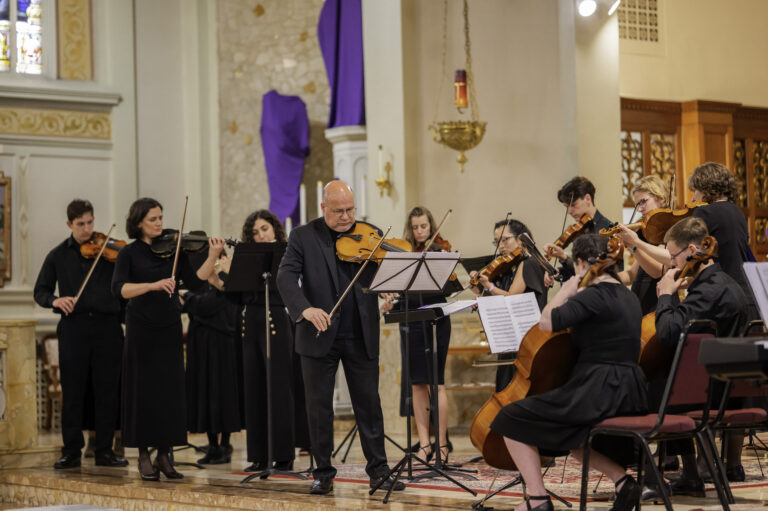
The gathering also incorporated communal prayer and Mass, including a liturgy with Archbishop Gregory J. Hartmayer, OFM Conv., of Atlanta.
Combining rigorous academic inquiry with Catholic spirituality, the conference highlighted the enduring relevance of the Franciscan intellectual tradition to contemporary challenges while inviting participants to rediscover the Christian hope expressed by St. Francis, who welcomed Sister Death as the gateway to eternal life.